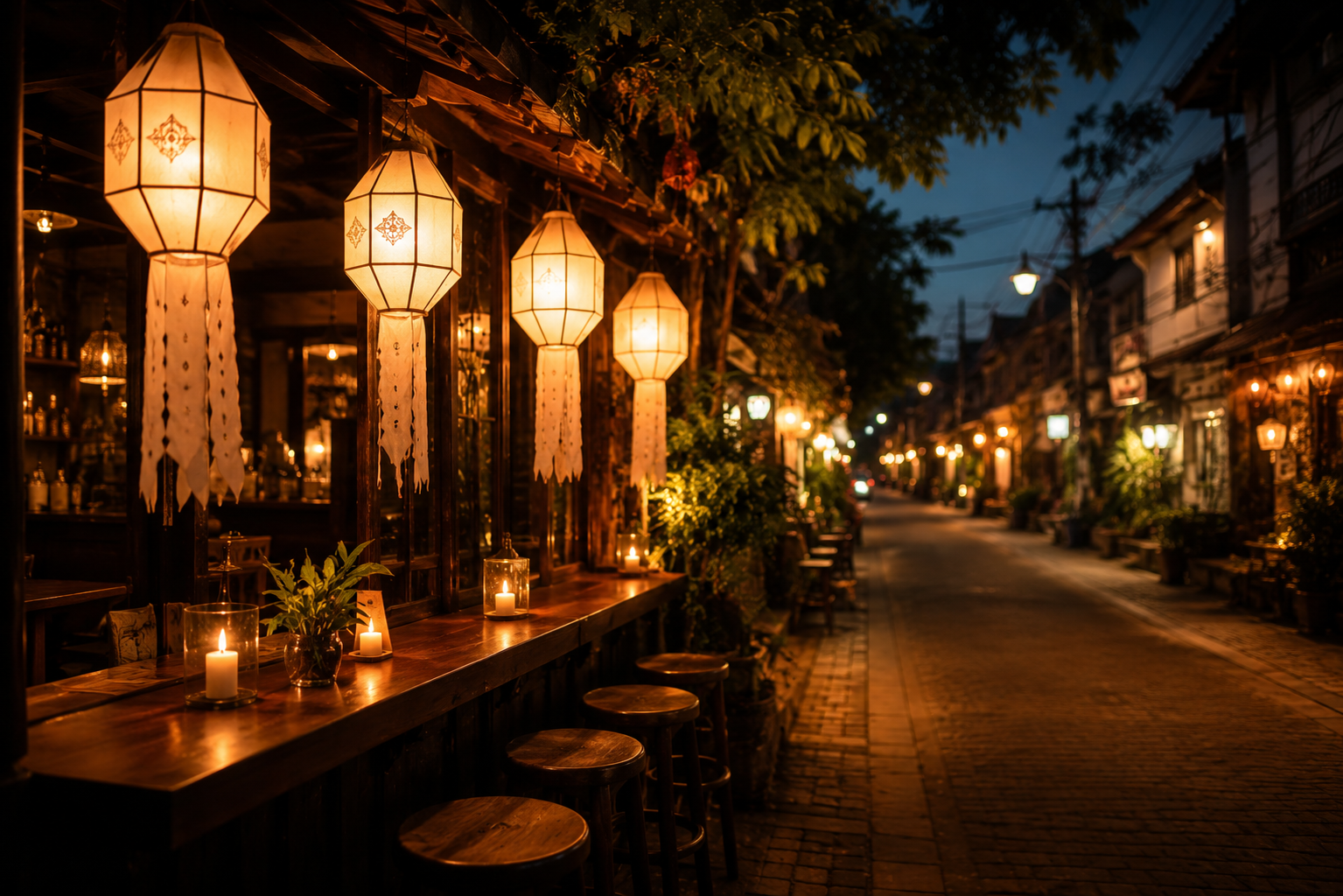
The first thing you notice about Chiang Mai after dark is what is missing. There are no thumping rooftop clubs, no neon promoters, no queues at one in the morning. The city does not really do late. It does long — long conversations, long walks between bars, long pours of single-origin gin in places that hold maybe twenty people and shut their doors before midnight.
This is, for a lot of travellers, the whole point. Bangkok is two hours south by plane and will sell you a wilder evening if that is what you want. Chiang Mai, ringed by its old moat and its quiet temples, is the slower cousin. Its nightlife unspools in pockets — the Nimman lanes, the riverside warehouses, the Old City rooftops — and the trick is knowing which pocket suits your mood on a given evening.
The Nimman Speakeasies
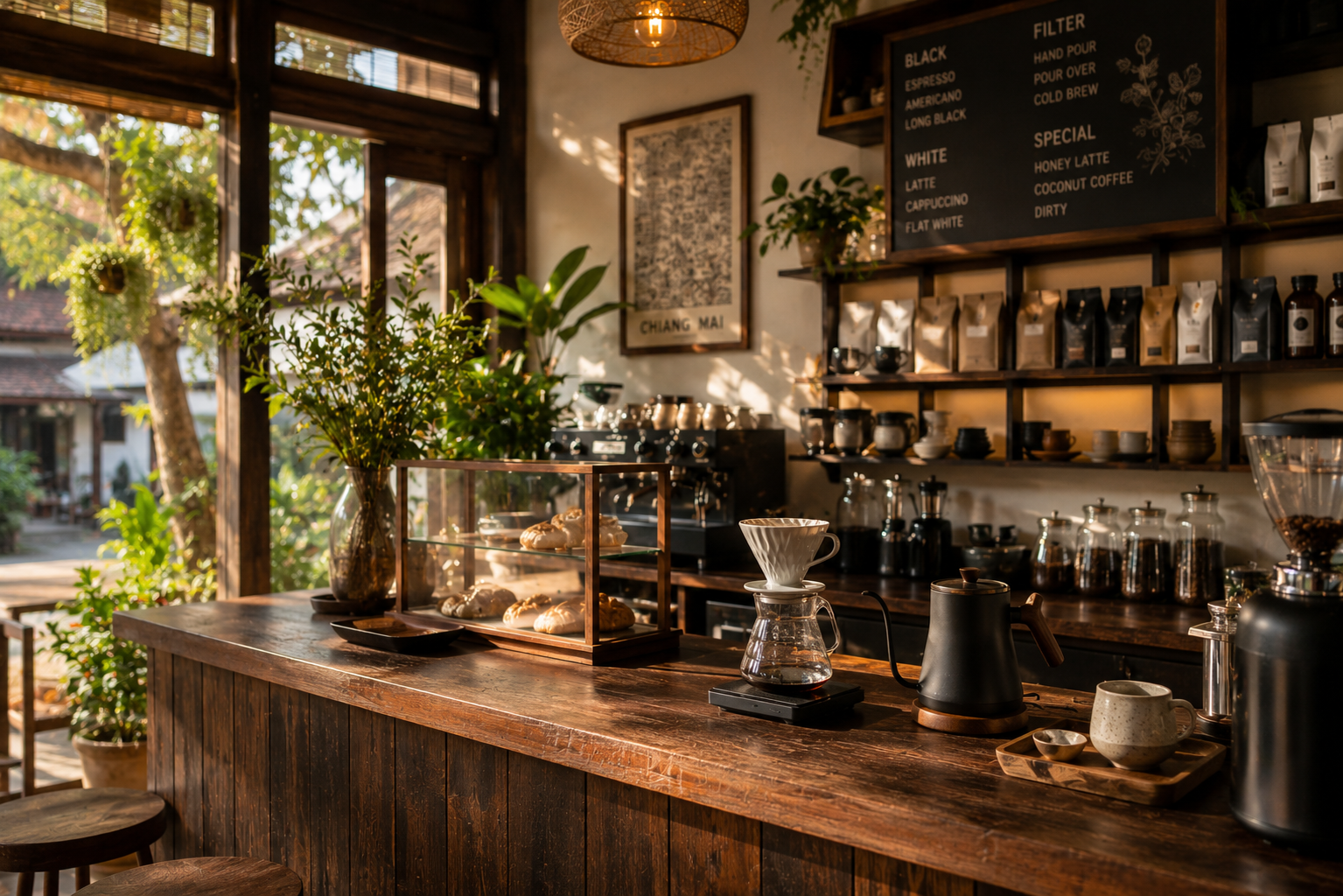
Nimmanhaemin Road, west of the moat, is where most first-time visitors end up. The big tourist bars on the main strip are fine but forgettable. The interesting drinking sits one or two sois back, behind unmarked doors. There is a cocktail room above a coffee shop on Soi 7 with maybe nine seats and a bartender who used to work in Tokyo. There is a listening bar on Soi 3 with a vinyl wall and no menu — you tell the host what mood you are in and he pours from there. Both close by eleven thirty. Both are worth the walk.
What ties these places together is restraint. The drinks are precise, the music is low, and nobody is trying to keep you for a second round you did not ask for. You leave when you are ready. You usually go home earlier than you expected to.
Riverside and the Warehouses
East of the old city, the Ping River bends through a stretch of converted warehouse spaces that have become the city's second nightlife district. The vibe is more relaxed than Nimman — longer tables, more live music, more locals. A few of the venues do small-plate Thai food until late, which is a help if you are working through several stops in one evening. The riverside breeze does the rest.
This is also where you find Chiang Mai's small jazz scene. There are maybe four or five rooms that put on real bands several nights a week, and the standard is higher than it has any right to be in a city this size. Cover charges are gentle. The audience tends to actually listen.
Sunday Walking Street and the Late Markets
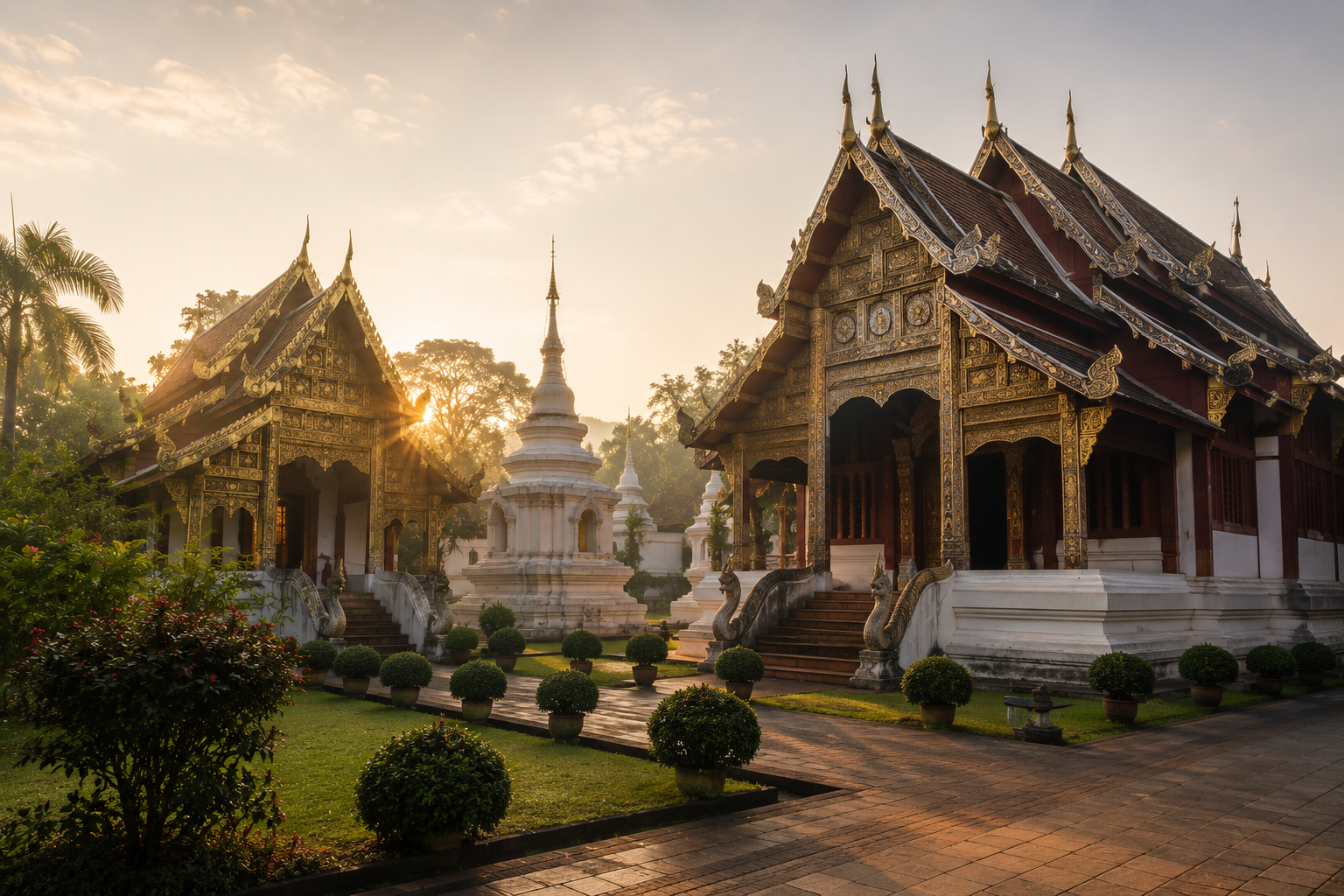
For many people, the most memorable evening in Chiang Mai is not a bar at all. The Sunday Walking Street, which closes Ratchadamnoen Road to traffic between Tha Phae Gate and Wat Phra Singh, is a long, slow river of food stalls, craftspeople, and street musicians. You drift, you eat, you sit on temple steps and watch other people drift. It is technically a market, but it is also the closest thing the city has to a weekly public ritual.
The Saturday Walking Street on Wualai Road runs the same idea on a smaller, more local-feeling scale. Either night works as a kind of soft prelude to a bar; either also works as the entire evening if you are not in the mood for anything stronger than fresh lime juice over crushed ice.
How to Pace Yourself
The honest advice on Chiang Mai nightlife is this. Pick one neighbourhood per evening. Walk between two or three places rather than taxiing across the city. Eat early. Drink slowly. Leave room for the long conversations the city encourages. The places that stay with you after you fly home will almost always be the ones where you stayed longer than planned, not the ones where you tried to do everything in one night.
That, in the end, is what slow nightlife means. Not the absence of fun. The presence of attention.