The old city of Chiang Mai is a near-perfect square, about a mile and a half on each side, surrounded by a wide moat and the broken remains of a brick wall. Inside that square sit something like thirty temples, ranging from the immense and famous to small wooden viharns where you might be the only visitor of the morning. A walking tour does not need to hit all of them. A walking tour needs to hit the right six, in the right order, with the right coffee stops in between.
This is the route I send people on when they have one free morning and want to see the old city properly. It takes about four hours at an unhurried pace. It starts at the eastern gate and ends near the southern wall, which conveniently puts you within a short walk of lunch. Wear shoulders-covered clothes — you will be entering active temples — and bring socks. Some of the wooden floors get hot.
Start: Tha Phae Gate, 8.30am
Tha Phae Gate is the eastern entrance to the old city, the most photographed corner of the square, and a useful meeting point because it sits at the end of a straight road that runs all the way through to the western wall. The plaza in front of the gate is usually empty at this hour. Take a photo, walk through, and turn left immediately into the side streets.
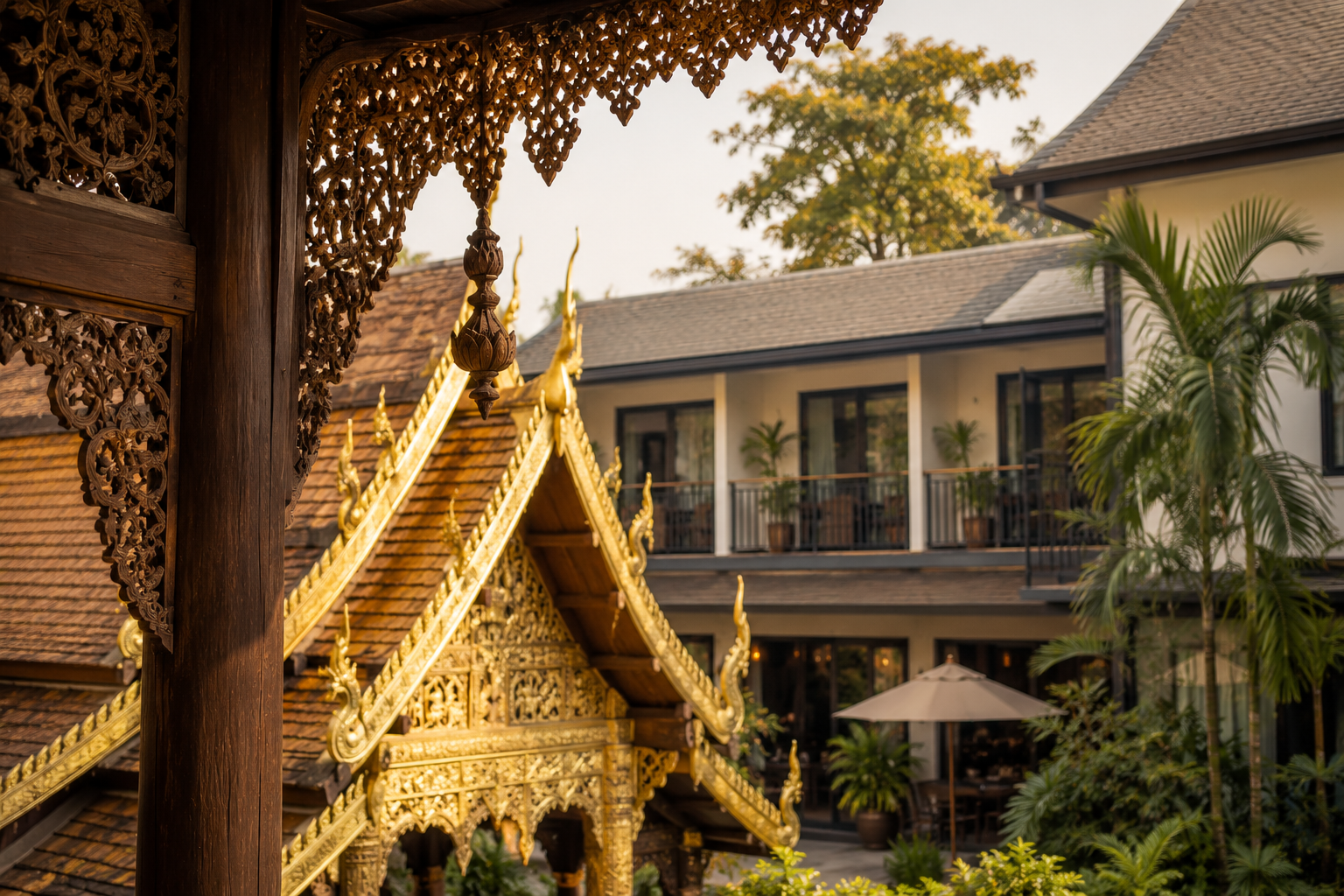
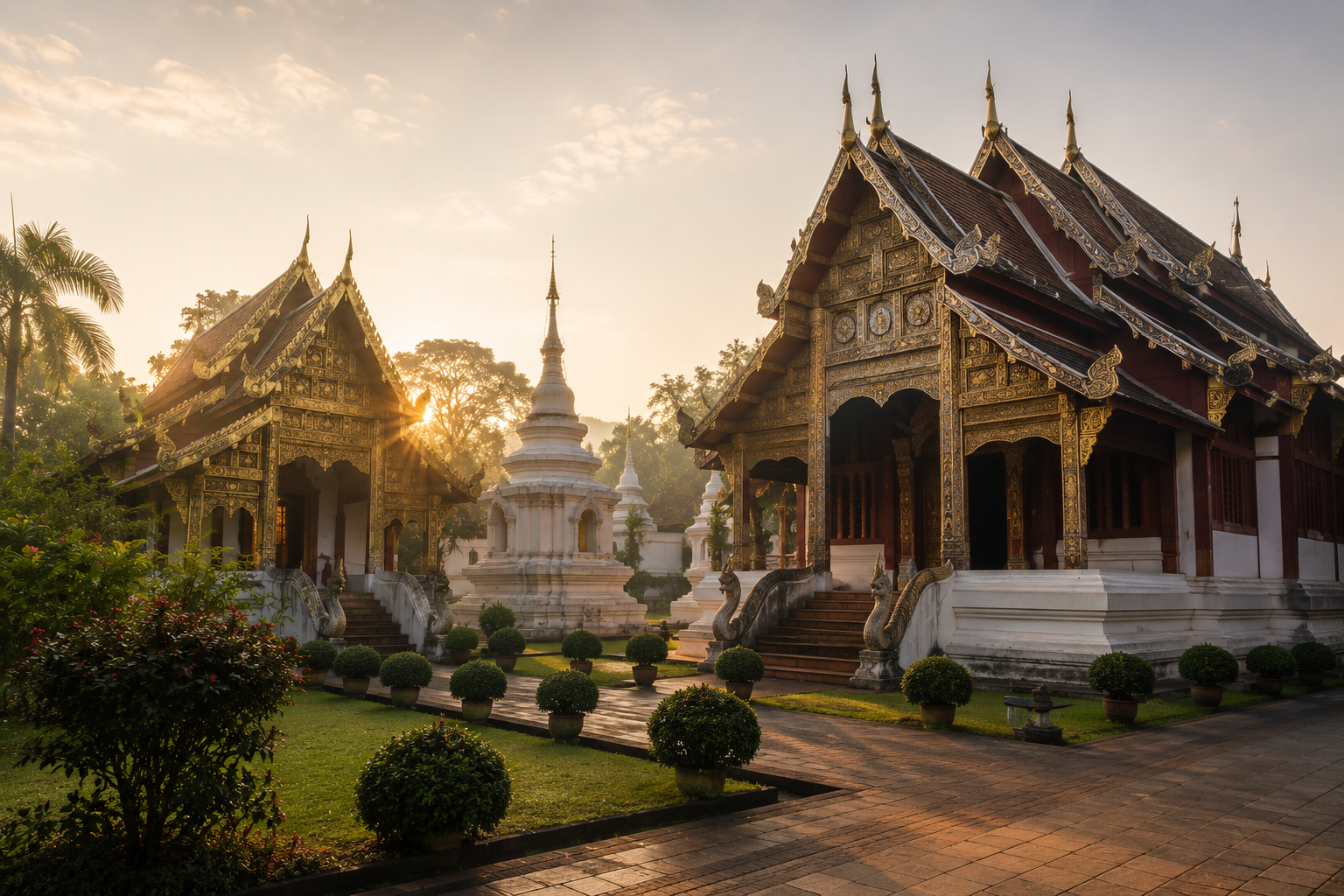
First stop, a five-minute walk south, is Wat Chedi Luang. The enormous brick chedi at its centre was the tallest structure in the old kingdom for several centuries and is still arresting in its half-ruined state. The viharn beside it is one of the best examples of Lanna woodwork in the city. Spend twenty minutes. Sit down for a few of them.
The Northern Loop
From Chedi Luang, walk north on Phra Pokklao Road. Wat Phan Tao, immediately to the north of Chedi Luang, is a small all-teak structure with a quiet courtyard and almost always a friendly resident cat. It is easy to underrate because it is small. Do not. Stand inside it for five minutes and you will understand more about Lanna religious architecture than any plaque could tell you.
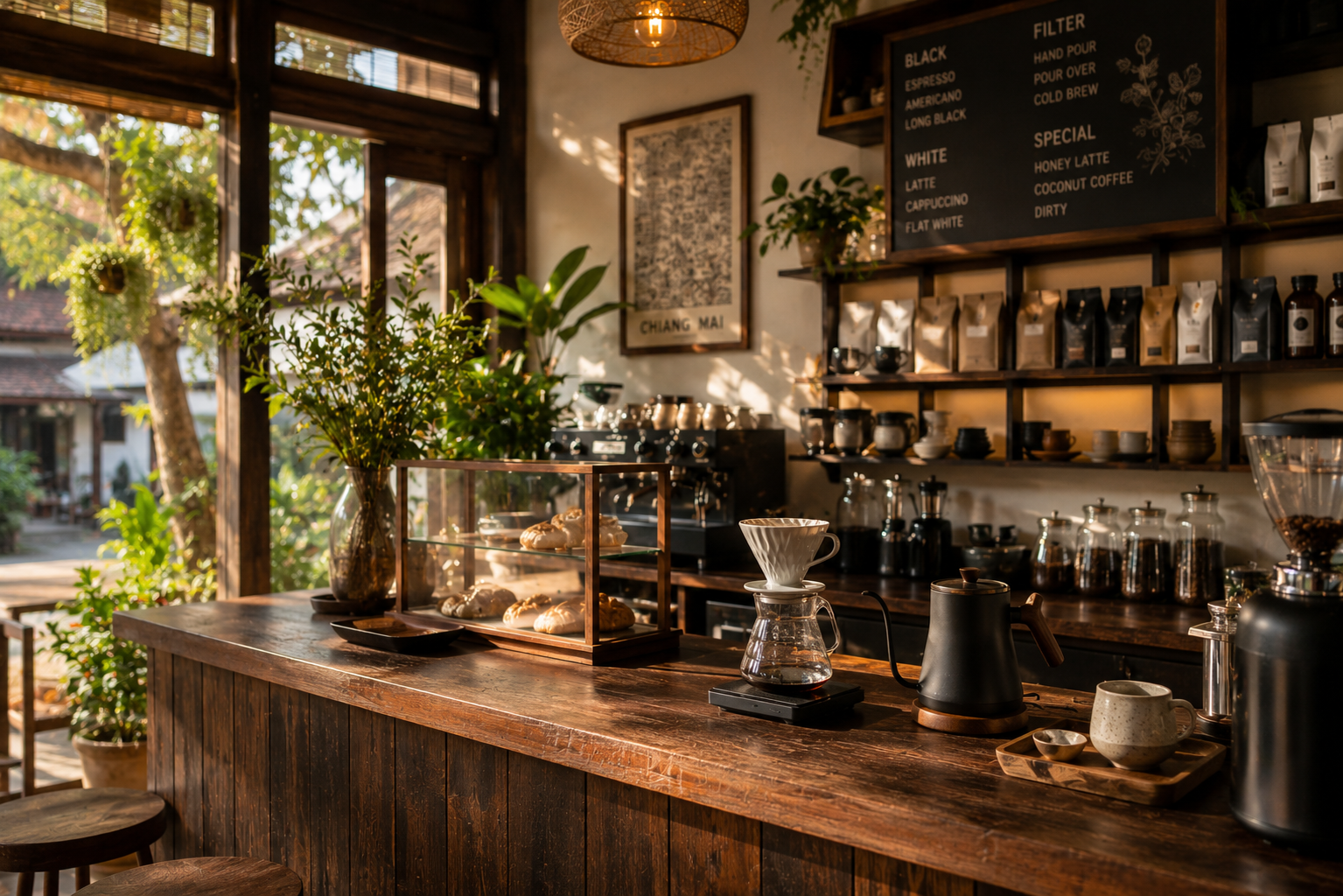
Continue north and turn east along Ratchadamnoen Road. There is a coffee shop on the south side of the road, opposite Wat Inthakhin Sadue Muang, that opens at nine. Sit outside. Order a phin pour-over of a Doi Chaang single origin. This is the first of your three coffee stops, and the one where you re-check your map and reset your pace.
Mid-Morning: The Quiet Temples
Walk west along Ratchadamnoen toward Wat Phra Singh, which sits at the western end of the road and is the biggest temple in the old city. It is also the busiest, particularly by mid-morning. Save it for last. Instead, divert north into the residential lanes around Soi 6 and 8. There are at least three small temples here that almost no tour groups visit, where the resident monks may invite you in for a brief blessing and a pour of water.
One of these — Wat Lok Molee, just outside the northern wall — is genuinely special. The brick chedi is older than most of what you have seen so far, and the courtyard is a working monastic space with the daily rhythm of robed monks moving between buildings. Visit. Leave a small donation. Sit on the steps for ten minutes.
Finish: Wat Phra Singh and Lunch
By now you have walked perhaps three hours and seen five temples properly. Loop back south through the western half of the old city to Wat Phra Singh. It will be busier than it was at nine, but the central viharn, the Lai Kham, is worth pushing through any crowds to see. The murals inside depict daily Lanna life in a way that almost no other temple does. Spend half an hour. Find a bench in the shade of the southern courtyard. Then walk south to Wualai Road for lunch — the silver district has several small khao soi shops that locals rate higher than any of the more famous places.
That is the route. Six temples, three coffees, no tour bus, no headset commentary. You will remember it longer than the version with all of those things.