Most travellers think of Thai massage as a single thing. You lie on a mat, someone presses on you, you leave feeling looser. That picture is not wrong, but it leaves out what makes the work interesting once you know what to look for. There is no single Thai massage. There is a family of traditions, with regional dialects, lineage rivalries, and a long history of cross-pollination with neighbouring cultures. Understanding even the rough outlines of that family changes how you choose a studio and how you experience a session.
What we now call the traditional Thai massage tradition grew from a mix of Indian Ayurvedic theory, Chinese pressure-point practice, and indigenous Southeast Asian bodywork, refined over many centuries inside Buddhist temple medicine. It splits, broadly, into two regional schools — the central or southern school, anchored in Bangkok and codified at Wat Pho, and the northern or Lanna school, taught in Chiang Mai and its outlying provinces. Knowing which school your practitioner trained in tells you most of what you need to know about the session you are about to have.
The Wat Pho Lineage
The Wat Pho school in Bangkok is the most internationally recognised Thai massage lineage. Its written reference texts, inscribed on stone tablets at the temple in the early nineteenth century, codified pressure points, energy lines (sen), and stretching sequences in a way that has been treated as the standard ever since. Practitioners trained in this lineage tend to work more precisely — specific points held for specific counts, defined sequences moving along defined lines.
The texture of a Wat Pho-style session is firm and structured. You will feel the practitioner working through a clear plan. If you tell them about a particular sore spot, they will fold it into the existing structure rather than improvising around it. This is the version of Thai massage that most international training programmes teach, and the version most readily exported to spa menus in cities outside Thailand.
The Lanna Northern School
The Lanna school, taught in Chiang Mai, feels noticeably different on the body. The pace is slower. The pressure is applied more with the forearms and heels of the hands than with the thumbs. There is more rocking, more compression, more rhythmic squeezing along the long muscles. The energy line theory is the same but the emphasis differs — northern practitioners tend to work more on the legs and lower back, where central Thai practitioners often work more on the spine and shoulders.
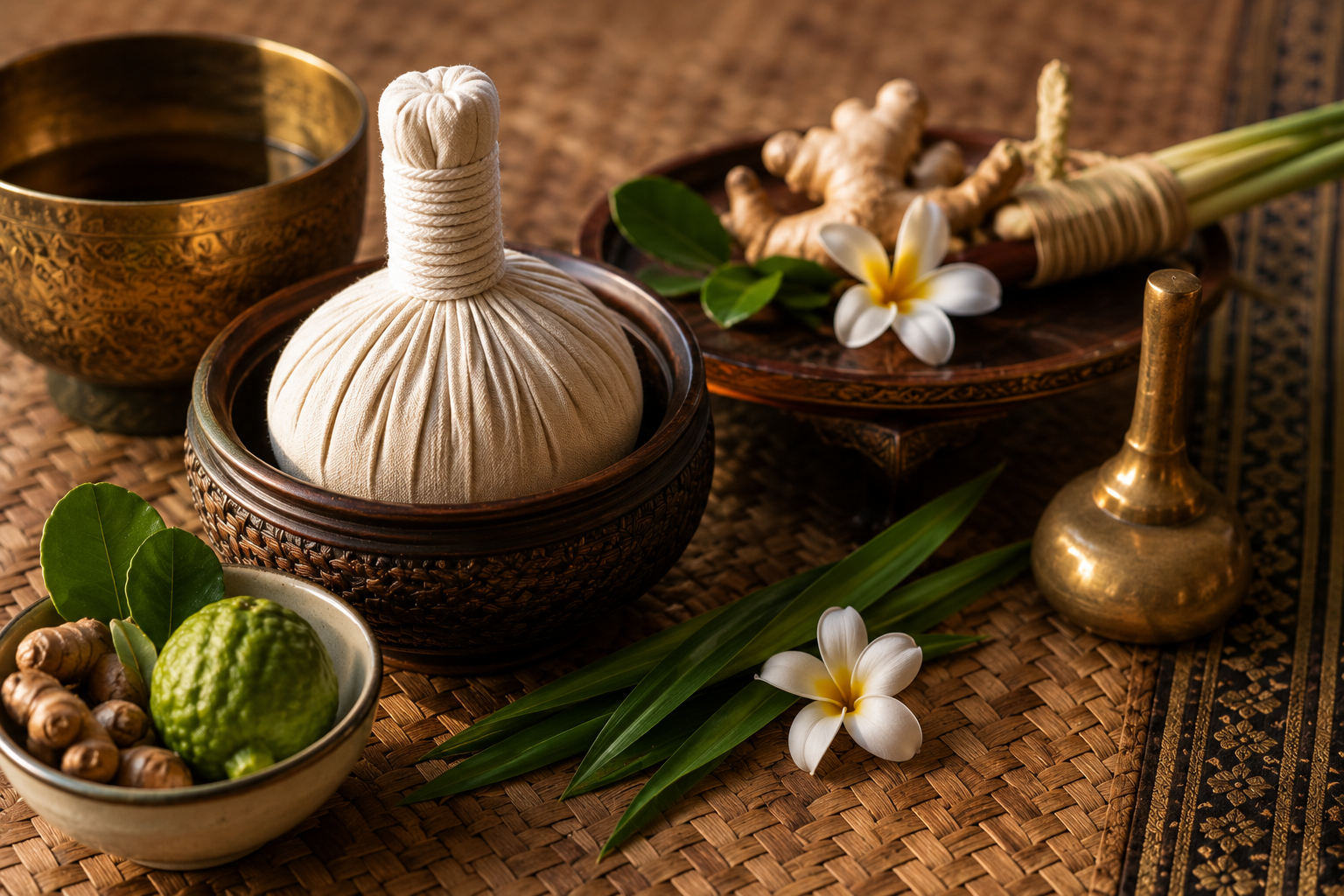
One of the most distinctive Lanna techniques is the use of herbal compresses, small muslin bundles of fresh lemongrass, kaffir lime leaf, ginger, and other ingredients, steamed and then pressed into the muscles. The compresses cool slowly, releasing the medicinal warmth gradually. A full herbal compress session usually runs ninety minutes to two hours and leaves the body feeling, in the words of one practitioner, like it has just had a long warm bath from the inside out.
Modern Practitioners
The honest truth about the contemporary Thai massage scene is that the lines between schools have blurred. Most working practitioners in Chiang Mai have trained in both lineages and pull from each depending on the body in front of them. The better ones treat the tradition as a living craft rather than a fixed text. They will adjust pressure, sequence, and duration to what they read in your tension patterns within the first five minutes.
You can tell a well-trained practitioner by small signs. They check in early about pressure. They notice and respond to your breathing. They do not chat through the session unless you initiate it. They do not push for upsells. They charge fairly and consistently, without elaborate negotiation. These markers cut across both schools and are more useful than lineage badges on the studio wall.
What This Means for Your Booking
If you have one session to give Thai bodywork a try, book a Lanna-style hour with a herbal compress add-on. If you have a more specific issue — a tight shoulder from a long flight, a long-running lower back tightness — book a session with a Wat Pho-trained practitioner who can move with precision rather than atmosphere. Most of the better Chiang Mai studios can offer either. Ask, and they will tell you. That conversation, more than anything else, is what separates a session you remember from a session you forget.